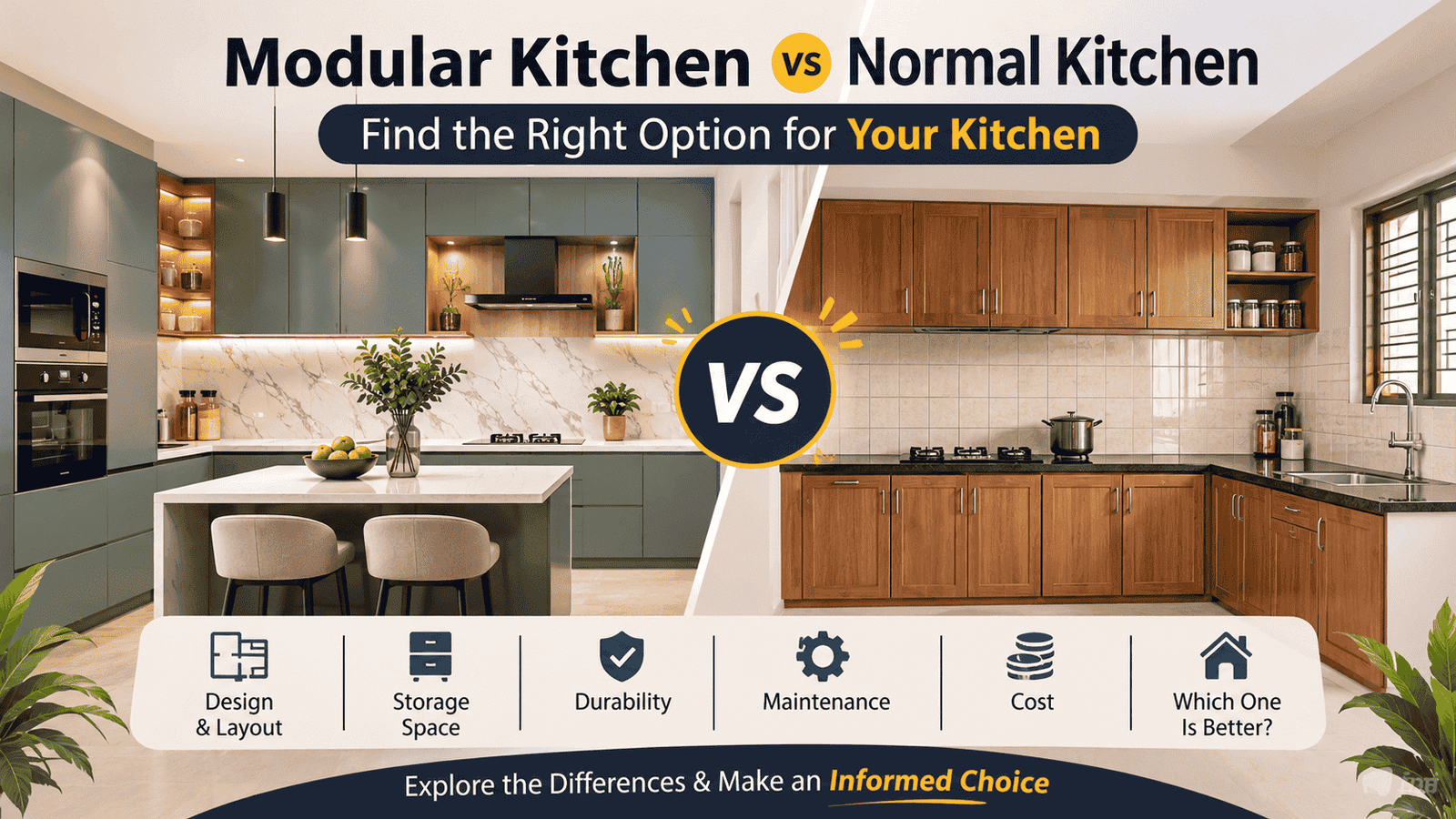
Modular Kitchen vs Normal Kitchen – Find the Right Option for Your Kitchen
The kitchen is one of the most important rooms in the house. It’s the space where functionality, comfort and design all come together. When you’re looking at a new kitchen or indeed a kitchen renovation, you’re invariably going to come up against the question of Modular Kitchen vs Normal Kitchen – which is the better option?
Both kitchen types have their own merits in the way they’re designed, the storage they provide, their durability, their ease of maintenance and their overall cost. A conventional kitchen is built on site using materials such as brick, cement, and tile. The modular kitchen is one where the units and cabinets are made in a factory and then assembled on site.
However, the right option depends on your available space, lifestyle, storage needs, and budget. In this blog, we’ll look at the differences between a modular kitchen and a normal kitchen to help you choose the right option for your home.
Difference Between Modular Kitchen & Normal Kitchen
The key difference between a modular kitchen and a conventional kitchen lies in how they are built, the design flexibility they offer, and their storage systems.
A modular kitchen uses pre-fabricated cabinet units, drawers, shutters, and the like, which are then assembled on site. A conventional kitchen is built in the home using bricks, cement, tiles, and concrete.
A conventional kitchen has a fairly traditional, static structure, whereas a modular kitchen offers a more organised, modern, and flexible approach to kitchen design.
Here are some major differences:
- Construction: Modular kitchens use factory-made units, while conventional kitchens are built on site.
- Design: Modular kitchens offer modern finishes and can be designed to your specifications, while a standard kitchen generally has a much more basic design.
- Storage: Modular kitchens provide organised drawers, cabinets and corner solutions.
- Installation: Modular kitchen units are generally quicker to install once the site has been prepared.
- Maintenance: Individual modular units can be removed or replaced more easily.
- Flexibility: Modular kitchens offer greater flexibility when altering or upgrading storage elements.
Understanding the differences helps homeowners choose a kitchen that suits their actual needs.
What Is a Modular Kitchen?
A modular kitchen is a modern kitchen design that uses pre-fabricated cabinet modules, drawers, shelves, and storage units. The individual components are designed to fit the space available and are then assembled on site.
The major benefit of a modular kitchen is its highly organised design, with every module designed to make cooking, cleaning, and storing your kitchen essentials much easier.
Key Features of a Modular Kitchen
- Custom layouts available in L-shaped, U-shaped, parallel, straight and island configurations.
- Smart storage: includes pull-out drawers, tall units, corner cabinets and bottle pull-outs.
- Modern Finishes: lots of colours, textures, laminates and shutter designs.
- Easy maintenance: individual cabinets and accessories can be repaired or replaced.
- Better space utilisation (makes efficient use of corners, vertical space, and other areas you’d normally ignore).
A modular kitchen can be tailored to your cooking habits, your family size and the space available. If you’re renovating your kitchen, exploring options through professional Modular Kitchen in Jaipur services will give you a clear idea of different layouts, materials, and storage options.
What Is a Normal Kitchen?
A normal kitchen (also known as a traditional or civil kitchen) is built on site using bricks, cement, concrete, tiles and stone.
Unlike modular kitchens, the cabinets and storage are generally built in permanently into the kitchen. The worktop is typically granite or a similar material, and the shelving and storage are usually masonry or carpentry work.
Key Features of a Normal Kitchen
- Traditional Construction: Built directly at the site using civil work and masonry.
- Permanent structure: Cabinets, platforms and shelves are generally fixed.
- Simple Storage: Often includes open shelves, wooden cabinets and built-in storage spaces.
- Material Flexibility: You can select materials based on the homeowner’s preferences.
- Custom Construction: You can adjust dimensions during construction.
Standard kitchens are ideal for homeowners who prefer a traditional kitchen and want a permanent structure. If you plan to make changes later or replace a section, you’ll likely end up with more construction and carpentry work than if you’d chosen a standard kitchen.
Modular Kitchen vs Normal Kitchen: Detailed Comparison
When you’re comparing a modular kitchen to a conventional kitchen, you need to look at more than just the look. Construction, materials, storage options, durability, and maintenance requirements all affect the experience.
| Comparison Factor | Modular Kitchen | Normal Kitchen |
|---|---|---|
| Construction | Factory-made modules assembled on-site | Built directly at the site |
| Design | Modern and customisable | Traditional and comparatively simple |
| Storage | Smart drawers, pull-outs and cabinets | Conventional shelves and cabinets |
| Installation | Generally quicker after site preparation | Requires civil and carpentry work |
| Maintenance | Individual units can be replaced | Repairs may involve construction work |
| Space Utilisation | Designed for efficient space utilisation | Depends on construction and planning |
| Material Options | Plywood, MDF, HDF/HMR and other board options | Cement, bricks, stone and wood |
| Flexibility | Easier to modify individual modules | Modifications can be more difficult |
| Appearance | Clean, organised and contemporary | Traditional and functional |
1. Design and Appearance
Modular kitchens offer a wide range of contemporary designs, with different cabinet finishes, colours, textures, and layouts. You can choose from glossy, matte, wooden, and many other finishes, depending on what you want for your interior.
Normal kitchens usually have a fairly basic layout and typically use tiled platforms, traditional shelves, and wooden cabinets.
2. Storage and Space Utilisation
Storage is of course a major factor in any kitchen. Modular kitchens offer a range of specialist storage solutions including corner units, pull-out baskets, tandem drawers and tall storage cabinets.
Standard kitchens will tend to rely on the usual array of shelves and cabinets, and they may well leave bits of space unused.
3. Materials and Durability
Modular kitchens are made from materials such as plywood, MDF, HDF/HMR boards and appropriate hardware. Durability depends on material quality, edge protection, installation, and maintenance.
Normal kitchens use brick, cement, granite and wood. Their durability also depends on construction quality and resistance to moisture.
4. Cost and Installation
The total cost of a modular kitchen will vary depending on its size, layout, materials, accessories, hardware, and finishes. Premium accessories and bespoke designs will naturally increase the outlay.
In some cases, normal kitchens may have a lower initial build cost. Still, the overall cost can be affected by the amount of additional carpentry, finishing and modification work required.
Modular kitchens generally go in much quicker once the site prep is done, whereas a conventional kitchen involves a whole host of on-site construction activities.
5. Maintenance and Repairs
One of the benefits of a modular kitchen is that individual cabinets, shutters, drawers and the like can be taken out or replaced as and when necessary.
In a normal kitchen, repairing a damaged section may involve additional carpentry, masonry, or tiling. Maintenance requirements will therefore depend on the kitchen’s construction and the quality of the materials used.
Which Kitchen Is Better for Indian Homes?
Both kitchen types can suit an Indian home; it comes down to your cooking habits, your family’s needs, the space you have, and your maintenance level.
Indian cooking is a multi-ingredient affair involving many different things (ingredients, utensils, spices, appliances, etc.) and a lot of cooking. As such, storage, ventilation and easy cleaning are all important.
A modular kitchen can be a practical choice for modern Indian homes because it offers:
- Dedicated storage for spices, cutlery and groceries.
- Pull-out drawers for easy access to everyday essentials.
- Space-saving solutions for small apartments.
- Different layouts for small and large kitchens.
- Easy-to-clean cabinet finishes and countertops.
A well-constructed conventional kitchen can also be a viable option for homeowners who prefer traditional construction and permanent storage.
If you want modern aesthetics, better organisation, better space use, and flexibility, a modular kitchen is generally the better option for a contemporary Indian home.
How to Choose the Right Modular Kitchen for Your Home?
Choosing the right modular kitchen requires proper planning. Before selecting a design, consider the following factors:
- Available Kitchen Space: Measure the kitchen area and identify the best layout according to its dimensions.
- Cooking Requirements: Consider your daily cooking habits, appliances and storage needs.
- Material Selection: Choose suitable materials based on moisture exposure, durability and maintenance.
- Storage Requirements: Plan cabinets, drawers, corner units and tall storage according to your needs.
- Kitchen Layout: Choose an L-shaped, U-shaped, parallel, straight, or island layout based on available space.
- Budget Planning: Consider cabinets, hardware, countertops, accessories and installation requirements.
- Professional Planning: Work with an experienced designer who can balance functionality, aesthetics and available space.
A well-planned kitchen improves day-to-day convenience and makes much better use of the available space.
Why Choose NBP Interiors for Modular Kitchen in Jaipur?
Choosing the right kitchen design isn’t just about picking out some attractive cabinets. It’s about designing a kitchen that works for your cooking habits, storage needs, and lifestyle.
At NBP Interiors, we specialise in designing kitchens that are both practical and beautiful, tailored to the homeowner’s individual requirements.
Here is what makes our approach different:
- Customised kitchen designs: we design to your space, your preferences and your lifestyle.
- Smart Storage Solutions: We focus on practical storage with drawers, cabinets and modern accessories.
- Quality Materials: We help you select suitable materials for durability and everyday use.
- Modern Layouts: We offer different kitchen layouts to use available space efficiently.
- Budget Planning: We plan designs and material selections according to your requirements.
- Professional Support: Our team focuses on design planning, material selection and project execution.
If you are looking for an experienced Interior designer in Jaipur, NBP Interiors can help you plan a kitchen that combines functionality, comfort and modern design.
Get in touch with NBP Interiors to discuss your kitchen requirements and explore suitable modular kitchen designs for your home.
The fundamental difference is in how they’re built. A modular kitchen is made of prefabricated cabinets, drawers, and storage units that are assembled on site. A conventional kitchen is generally built on site using bricks, cement, tiles and the like. Modular kitchens are more flexible, with better storage organisation and the ability to easily replace individual components. A conventional kitchen, on the other hand, is a more permanent, traditional type of construction.
A standard kitchen will probably have a lower initial build cost depending on the materials and labour. The total cost, though, depends on the design, size, materials, finishes, and installation. Modular kitchens can be specified in a variety of ways to suit all budgets, from the most basic to the most premium. Consider the full set of project requirements, not just the initial cost.
Yes, modular kitchens can be tailored to your available space, kitchen dimensions, and individual requirements. You can go for an L-shaped, U-shaped, parallel, straight or island layout. You can plan cabinet size, the number and type of drawers and shelves, and all associated accessories to meet your storage needs. Good professional space planning will of course help to make the best use of corners, the vertical space and any smaller areas.
A modular kitchen can be a better option for homeowners who want a modern design, good storage, and easy maintenance. You can remove, repair, or replace modules as needed. A traditional kitchen on the other hand can be a good option for the homeowner who is after a more permanent type of construction and a conventional style. The better option depends on your lifestyle, cooking habits, available space, and long-term requirements.
Modular kitchens generally have the advantage in storage and space utilisation, as they incorporate specialist fittings such as pull-out drawers, corner units, tall cabinets, and organisers. This makes day-to-day essentials much more accessible. A conventional kitchen can, of course, have plenty of storage too, but the extent depends on the cabinet design and build. A good layout is important in either type of kitchen.
Yes, a modular kitchen can be a worthwhile investment because it offers organised storage, modern designs and easier maintenance. You can replace individual cabinets and accessories without rebuilding the entire kitchen. Its long-term value depends on the quality of materials, hardware, installation and regular maintenance. Selecting suitable materials according to your cooking habits can improve its durability and everyday functionality.