
10 Types of Flooring: Best Flooring for Houses in India, Styles, Benefits & Uses
Choosing the right flooring for your house involves more than just looking at its design. You should also consider durability, moisture, foot traffic, maintenance, comfort, budget, and the overall style of your home.
Different flooring materials work better in different rooms. Vitrified tiles are popular for high-traffic areas. Wooden and laminate flooring can create a warmer feel in bedrooms. Vinyl works well when you want easy maintenance and moisture resistance. Marble and granite can give your home a premium appearance.
India offers many flooring options for homes. However, every room has different requirements. Kitchens and bathrooms need flooring that can handle moisture and frequent cleaning. Bedrooms can benefit from warmer and more comfortable surfaces.
If you are comparing the 10 types of Flooring, it is important to understand how each material performs in different areas of your house.
Before choosing from different flooring types, consider these factors:
- Durability: Choose flooring according to the daily foot traffic.
- Maintenance: Some materials need regular cleaning, polishing, or special care.
- Moisture resistance: This matters in kitchens, bathrooms, balconies, and utility areas.
- Comfort: Consider how the flooring feels when you walk barefoot.
- Budget: Include material, installation, finishing, and maintenance costs.
- Design: Match the color, texture, pattern, and finish with your interiors.
- Room usage: Flooring that works in a bedroom may not suit a bathroom.
A practical approach is to select flooring room by room. You do not always need to use the same material throughout the house.
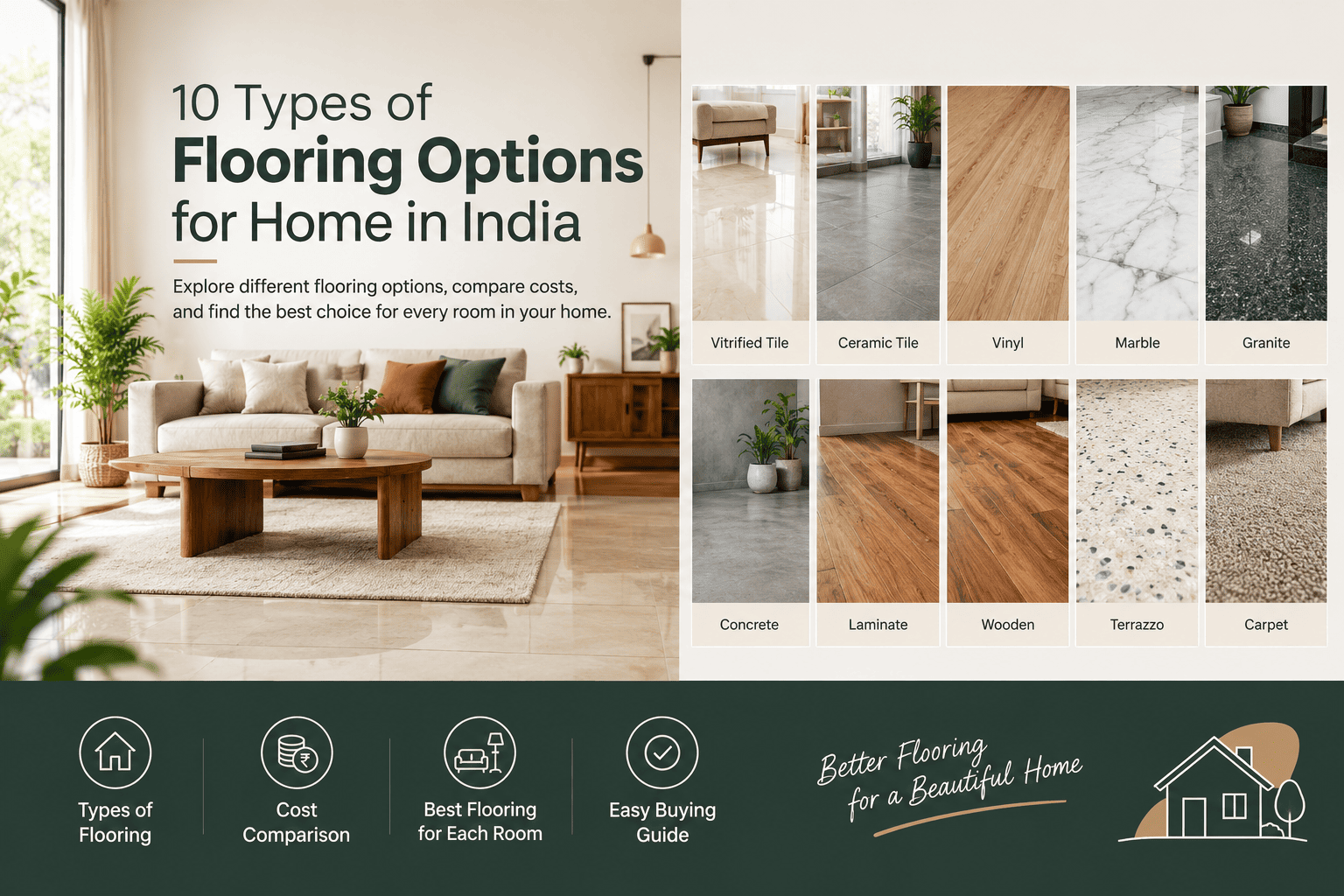
10 Types of Flooring Options for Home in India
India has a wide range of flooring materials for residential interiors. Each option offers different benefits, designs, maintenance needs, and price points.
The 10 types of Flooring discussed in this guide can help homeowners compare different materials before making a final decision.
Here are 10 popular Types of Flooring In India that homeowners can consider for their homes:
- Vitrified Tile Flooring
- Ceramic Tile Flooring
- Vinyl Flooring
- Marble Flooring
- Granite Flooring
- Concrete Flooring
- Laminate Flooring
- Wooden Flooring
- Terrazzo Flooring
- Carpet Flooring
These 10 types of Flooring offer different combinations of durability, comfort, appearance, maintenance, and cost. The right choice depends on the room and your personal requirements.
1. Vitrified Tile Flooring
Vitrified tiles are one of the most popular flooring choices for Indian homes. Manufacturers use a special process to create a dense and low-porosity surface. This makes vitrified tiles durable and easy to maintain.
These tiles are available in many colors, patterns, textures, and finishes. Some designs imitate natural stone or wooden surfaces. This gives homeowners plenty of choices for different interior styles.
Vitrified tiles are also one of the most commonly preferred options when homeowners compare the 10 types of Flooring for high-traffic areas.
Advantages of vitrified flooring include:
- Durable for regular foot traffic
- Easy to clean
- Available in many designs
- Requires relatively low maintenance
- Suitable for living rooms and halls
- Works well in kitchens and bedrooms
- Available in large-format sizes
Vitrified tiles can feel cold underfoot, especially during winter. Some polished finishes can also become slippery when wet. Therefore, choose the finish according to the room and its usage.
If you want durability, design variety, and easy maintenance, vitrified tiles can be a practical flooring choice.
2. Ceramic Tile Flooring
Ceramic tiles are another common flooring option for Indian homes. Manufacturers make these tiles from clay and other natural materials. They are available in different colors, patterns, textures, and finishes.
You can find ceramic tiles with simple designs as well as patterns inspired by wood, stone, and decorative surfaces. This makes them suitable for many interior styles.
When exploring different Types of Tiles for Floor, ceramic tiles offer a wide range of colors, patterns, sizes, and finishes.
Benefits of ceramic flooring include:
- Wide range of designs
- Easy everyday cleaning
- Good availability
- Suitable for different interiors
- Available at different price levels
- Easy to replace if individual tiles get damaged
The strength and water absorption of ceramic tiles vary by product. For bathrooms and other damp areas, choose tiles designed for such conditions.
Ceramic and vitrified tiles may look similar, but their properties can differ. Always check the tile specifications before making a final decision.
Ceramic flooring is another useful option to consider when comparing the 10 types of Flooring for different rooms.
3. Vinyl Flooring
Vinyl flooring is a practical option for homeowners who want an alternative to traditional tiles. You can find vinyl in sheets, planks, and tiles.
It can recreate the appearance of wood, stone, and other materials. This makes it useful for modern interiors where design and easy maintenance both matter.
Vinyl is also one of the Flooring Types that can provide a softer feel compared with traditional hard tiles.
This flooring can work well in:
- Bedrooms
- Living rooms
- Home offices
- Children’s rooms
- Other low to moderate-traffic areas
Vinyl can feel softer and more comfortable than hard tile surfaces. Some products also offer good moisture resistance.
However, performance depends on the product and installation method. Check the specifications for moisture resistance, thickness, wear layer, and installation requirements.
Prepare the subfloor properly before installation. An uneven surface can affect the final appearance and performance.
If you want a stylish flooring alternative with easy maintenance, vinyl is worth considering as part of these 10 types of Flooring.
4. Marble Flooring
Marble has been a popular flooring material in Indian homes for many years. Its natural patterns and unique veining can give interiors a luxurious appearance.
Each marble slab can have a different pattern. This natural variation gives the flooring a distinctive character.
Marble works particularly well in:
- Living rooms
- Entrance halls
- Corridors
- Large open spaces
- Luxury homes
Advantages of marble flooring include:
- Natural appearance
- Unique patterns and veining
- Premium visual appeal
- Multiple colors and varieties
- Works with traditional interiors
- Complements contemporary designs
Marble needs regular care to maintain its appearance. It can stain more easily than some other flooring materials. Some finishes can also become slippery when wet.
Choose marble when appearance and natural character are important priorities.
For homeowners searching for the Best flooring for House, marble can be an excellent choice when luxury and natural beauty are more important than low maintenance.
5. Granite Flooring
Granite is a hard and durable natural stone. It works well in areas that experience frequent foot traffic.
Homeowners can choose granite in many colors and patterns. This makes it suitable for both traditional and modern interiors.
Granite flooring can work well in:
- Living rooms
- Halls
- Entrance areas
- Staircases
- Kitchens
- High-traffic areas
The hardness of granite makes it suitable for demanding spaces. However, the surface can feel cold underfoot.
Installation and finishing also affect the final appearance. Choose a suitable finish based on the room and its level of moisture.
For homeowners who want a durable natural stone, granite can be a practical choice.
Granite is another strong option among the 10 types of Flooring, especially for areas where durability and long-term performance are important.
6. Concrete Flooring
Concrete flooring works well for modern and minimalist interiors. It can create a clean and industrial appearance without using traditional tiles.
You can finish concrete in different ways. Polishing and other surface treatments can change its texture and appearance.
Concrete is particularly useful if you are exploring Floor Design without Tiles. Instead of covering the entire floor with conventional tiles, you can use the concrete surface itself as part of the interior design.
Benefits of concrete flooring include:
- Strong base material
- Modern appearance
- Minimal visible joints
- Works well with industrial interiors
- Suitable for contemporary designs
- Can create a seamless visual effect
Concrete can feel hard underfoot. It may also lack the warmth of wood or carpet.
Proper surface preparation plays an important role in the final result. Professional finishing can help create a smoother and more attractive surface.
Concrete flooring can be a good choice for homeowners who prefer simple and modern interiors.
It is also one of the more interesting Flooring Types for people who want a modern Floor Design without Tiles.
7. Laminate Flooring
Laminate flooring can recreate the appearance of wood or stone. It uses a layered construction to create a decorative surface.
Many homeowners choose laminate because it can provide a warm and modern look without using natural wood.
It can work well in:
- Bedrooms
- Living rooms
- Study rooms
- Home offices
Advantages of laminate flooring include:
- Wood-like designs
- Stone-like designs
- Easy everyday cleaning
- Wide range of colors
- Multiple patterns and textures
- Alternative to natural wood
Laminate is not the same as solid hardwood. Its moisture resistance also varies between products.
Avoid unnecessary water exposure unless the manufacturer specifically rates the product for higher moisture resistance.
Laminate can be a practical option when you want a balance between appearance, maintenance, and cost.
Among the 10 types of Flooring, laminate is particularly useful for homeowners who want the appearance of wood at a different price point.
8. Wooden Flooring
Wooden flooring can bring warmth and natural character to a home. Its grain, color, and texture can make bedrooms and living spaces feel more comfortable.
Homeowners can choose from different types of wooden flooring. Solid wood and engineered wood are two common options.
Their construction, maintenance needs, and performance can vary.
Benefits of wooden flooring include:
- Natural appearance
- Warm visual character
- Comfortable feel
- Works with modern interiors
- Works with classic interiors
- Complements wooden furniture
- Available in different shades and finishes
Wood requires more care than many tile options. Excessive moisture can also damage certain types of wooden flooring.
For this reason, avoid using standard wooden flooring in areas that remain wet for long periods.
If you want an alternative to tiles, wooden flooring can give your home a completely different appearance.
It can also be a great choice for homeowners looking beyond traditional tiles while comparing the 10 types of Flooring available for residential interiors.
9. Terrazzo Flooring
Terrazzo flooring combines chips of materials such as marble, granite, glass, or other aggregates with a binding material.
It has a distinctive speckled appearance. Modern terrazzo can create both subtle and bold floor designs.
Terrazzo can work well in:
- Living rooms
- Hallways
- Entrance areas
- Modern interiors
- Contemporary homes
Benefits of terrazzo flooring include:
- Distinctive appearance
- Multiple color combinations
- Strong and durable surface
- Suitable for modern interiors
- Suitable for classic spaces
- Can become a design feature
The final appearance depends on the aggregate, colors, finish, and installation method.
Like other hard flooring materials, terrazzo can feel less comfortable than carpet or other soft surfaces.
Terrazzo is worth considering if you want something different from conventional tile flooring. It is one of the 10 types of Flooring that can create a distinctive floor design.
10. Carpet Flooring
Carpet offers a softer alternative to hard flooring. It can make rooms feel warmer and more comfortable.
It can also help reduce sound. This makes carpet useful for bedrooms, children’s rooms, reading areas, and home offices.
Benefits of carpet flooring include:
- Soft and comfortable underfoot
- Helps reduce room noise
- Creates a warm appearance
- Available in many colors
- Available in different patterns
- Makes bedrooms feel cozy
Carpet can collect dust and may require regular cleaning. Spills and stains can also require quick attention.
Before choosing carpet for an Indian home, consider ventilation, dust levels, cleaning habits, and the local climate.
If comfort is your priority, carpet can be a useful option among the different Types of Flooring In India.
These 10 types of Flooring show how different materials can create completely different levels of comfort, appearance, and functionality.
Flooring Options for Home: Which Flooring Is Best for Each Room?
The Best flooring for House can vary from one room to another. A material that works well in a bedroom may not be suitable for a bathroom.
Instead of choosing one material for every room, consider the purpose and conditions of each space.
The 10 types of Flooring discussed above offer enough variety to select different materials for different areas of your house.
Best Flooring for Living Room
Living rooms usually experience regular foot traffic. The flooring should therefore offer durability and easy maintenance.
Vitrified tiles, marble, granite, laminate, wooden flooring, and terrazzo can all work well in living rooms.
If your home has heavy daily activity, choose a surface that is easy to clean. If you want a warmer appearance, consider wood or laminate.
You should also match the flooring with your furniture, wall colors, lighting, and overall interior style.
When comparing the Flooring Options for Home, always consider how the flooring will look with your complete living room design.
Best Flooring for Bedroom
Bedrooms need flooring that feels comfortable and creates a calm atmosphere.
Wooden flooring, laminate, vinyl, and carpet can work well in bedrooms. Tiles are also suitable if you prefer easy cleaning and a cooler surface.
Carpet provides softness and warmth. Wood and laminate can create a natural appearance.
Think about comfort, maintenance, appearance, and your personal preferences before selecting bedroom flooring.
The Best flooring for House is not always the same for every room. Bedrooms may require a different material from living rooms, kitchens, or bathrooms.
Best Flooring for Kitchen
Kitchen flooring must handle food spills, regular cleaning, foot traffic, and moisture.
Ceramic and vitrified tiles are popular choices because they are easy to clean. Granite can also work well if you prefer a natural stone surface.
Choose a flooring finish that provides suitable grip. Avoid highly porous materials that require excessive maintenance.
For kitchens, functionality should usually come before appearance.
You should also coordinate the flooring with your cabinets, countertops, colors, and storage. If you are planning a complete kitchen renovation, you can explore modular kitchen in Jaipur for a coordinated kitchen design.
When comparing Types of Tiles for Floor for a kitchen, always consider cleaning, moisture, grip, durability, and the overall kitchen design.
Best Flooring for Bathroom
Bathroom flooring needs to handle regular water exposure. It should also provide suitable slip resistance.
Tiles are among the most common choices for bathroom floors. However, you should consider the tile’s texture and finish before buying.
Smaller tiles can provide more grout lines. These lines may improve traction depending on the tile design and installation.
Choose flooring designed for damp areas. Do not select bathroom flooring based only on color or appearance.
Among the different Types of Flooring In India, tiles remain a practical choice for bathrooms because of their availability and range of finishes.
Best Flooring for Balcony
Balcony flooring must handle outdoor exposure, dust, moisture, and temperature changes.
Outdoor-grade tiles and other weather-suitable materials can work well. Your choice should also consider the balcony’s drainage and exposure.
Do not choose outdoor flooring only because it looks attractive indoors. The material must suit the local weather conditions.
Proper slope and drainage are also important. Standing water can damage the flooring and nearby construction.
Best Flooring for Pooja Room
A pooja room needs a clean and peaceful appearance. The flooring should also be easy to maintain.
Marble, vitrified tiles, ceramic tiles, and decorative surfaces can work well in this space.
Light-colored flooring can create a bright appearance. Natural stone can add a traditional touch.
Choose a surface that you can clean easily, especially if you regularly use the room for prayers and rituals.
Best Flooring for Hall
Halls and passages often receive considerable foot traffic. Choose flooring that can handle regular use and remains easy to clean.
Vitrified tiles, granite, and ceramic tiles can work well in these areas.
If the hall connects multiple rooms, use a flooring style that complements the rest of the house.
Neutral colors and simple patterns can also make narrow passages appear more spacious.
The right Floor Style can make a hall look wider, brighter, and more connected with the rest of the home.
How Do You Choose the Best Flooring for a House?
Start by considering how you will use each room. Then compare the flooring options according to durability, maintenance, comfort, appearance, and budget.
Your flooring should also complement the furniture, wall colors, lighting, doors, and overall interior theme.
If you are planning a complete home renovation, advice from the best interior designer in Jaipur can help you coordinate the flooring with the rest of your interior design.
The 10 types of Flooring offer different solutions for different design and functional requirements.
Consider these factors before making your decision.
1. Room Usage
Different rooms have different flooring requirements.
A bathroom needs moisture-resistant flooring. A bedroom can use a warmer and more comfortable material.
Understanding the purpose of every room will help you narrow down the Flooring Types that are suitable for your home.
2. Foot Traffic
Busy areas such as halls and living rooms need durable flooring.
Consider how many people use the space every day. Choose a material that can handle regular movement.
3. Moisture
Bathrooms, kitchens, balconies, and utility areas need flooring that can handle moisture.
Always check the manufacturer’s specifications before choosing flooring for wet areas.
4. Maintenance
Think about how much time you want to spend cleaning and maintaining the floor.
If you prefer quick cleaning, choose a surface that does not require frequent polishing or special treatment.
5. Comfort
Consider how the flooring feels under your feet.
Bedrooms may benefit from warmer surfaces. Kitchens and bathrooms usually need more practical and easy-to-clean options.
6. Design
Match the flooring with your furniture, walls, doors, lighting, and other interior elements.
Consider the color, texture, pattern, and finish before making your choice.
If you want Floor Design without Tiles, materials such as concrete, wood, vinyl, laminate, and other alternatives can create a different visual effect.
7. Budget
Do not consider only the material price.
Your total flooring cost can include installation, adhesives, surface preparation, wastage, finishing, skirting, and maintenance.
8. Durability
Choose flooring according to the expected usage of the room.
High-traffic areas need durable materials. Low-traffic spaces can offer more flexibility in material selection.
A good flooring choice balances appearance, performance, maintenance, comfort, and budget.
How Much Does Flooring Cost in India?
Flooring costs in India vary according to the material, quality, room size, installation method, labor charges, location, and finishing requirements.
The total project cost may include:
- Flooring material
- Transportation
- Installation or labor
- Surface preparation
- Adhesives or fixing materials
- Grout
- Skirting
- Material wastage
- Polishing
- Finishing
- Removal of old flooring
Natural stone may involve additional cutting, fitting, polishing, and finishing costs.
Wooden, laminate, and vinyl flooring can also require different installation methods and preparation.
The condition of your existing floor can affect the final cost. Uneven floors may need leveling or repair before installation.
When comparing different types of flooring, do not look only at the material price. Consider installation, maintenance, durability, and expected lifespan as well.
For an accurate estimate, calculate the total floor area first. Then select the material and installation method. Finally, account for preparation work and other additional costs.
Make Your House Better with the Right Flooring Options for Home
The right flooring can improve both the appearance and functionality of your home. It can also affect comfort, cleaning, maintenance, and the overall feel of each room.
There are many Flooring Options, but no single material works perfectly for every space.
Vitrified and ceramic tiles are practical choices for many everyday areas. Marble and granite can create a luxurious natural appearance. Vinyl and laminate offer versatile design options. Wooden flooring can add warmth, while carpet provides softness and comfort.
Concrete and terrazzo can create a more modern and distinctive interior.
The 10 types of Flooring covered in this guide show that every material has its own advantages and limitations. From traditional tiles to modern alternatives, homeowners have many choices for creating a functional and attractive home.
Before making your final decision, compare each flooring option based on:
- Durability
- Maintenance
- Moisture resistance
- Comfort
- Appearance
- Room usage
- Installation requirements
- Overall cost
You should also plan the flooring alongside your furniture, wall finishes, lighting, doors, and other interior elements. This approach helps create a more consistent design throughout your home.
The Best flooring for House is not always the most expensive option. It is the one that suits your room, lifestyle, design preferences, maintenance needs, and budget.
By understanding these 10 types of Flooring, you can make a more informed decision and choose the right flooring material for every part of your home.
Read More – 10+ Latest Modular Kitchen Colour Combination ideas
The most common kinds of flooring found in houses are vitrified tiles, ceramic tiles, vinyl, marble, granite, concrete, laminate, wooden flooring, terrazzo, and carpet. The various materials differ in terms of durability, ease of maintenance, comfort, look, resistance to moisture, and cost. The choice of material will depend on the location where it is to be installed and on how the room will be used; for instance, tiles are suitable for kitchens and bathrooms, whereas wood, laminate, or carpet might be better for bedrooms.
You shouldn’t assume that any flooring material is 100% waterproof without first examining the entire system, such as the joints, the subfloor, and the way it has been installed. Although certain vinyl products are very water-resistant and tiles that have been properly chosen can work well in damp areas, water can still get to the subfloor via the joints or through poorly sealed edges. In bathrooms and similar wet areas, it is important to select a type of flooring that is designed for exposure to moisture and to make sure that the installation, drainage, and waterproofing below the finished surface are all carried out properly.
The extent to which flooring lasts varies according to the material used, the quality of the product, how it is installed, the amount of maintenance it receives, and the level of foot traffic it is subjected to. In high-traffic areas, both granite and a number of high-quality tile products are able to offer good performance, whereas other materials might be more appropriate for rooms that have less traffic. Natural stone can also be durable if it is installed and looked after properly. When you are comparing different types of flooring, you should take into account their hardness, resistance to wear, exposure to moisture, maintenance needs, and the manufacturer’s specifications rather than deciding simply on the name of the material.
Since there is no one type of flooring that is suitable for all houses, this is because the needs of different rooms vary. Vitrified tiles are suitable for a great many areas that see a lot of foot traffic, and ceramic tiles, vinyl, laminate, wood, marble, granite, and carpet all have their own advantages. The choice of the most appropriate flooring for a house should be based on how the room is used, the level of moisture, the amount of foot traffic, maintenance requirements, budget, comfort, and design preferences rather than just on appearance.
The type of flooring that is most suitable for your feet will depend on whether you place more importance on softness, warmth, or ease of maintenance. Carpet is among the softer choices and may feel comfortable if you’re walking around barefoot. Wooden, laminate, and certain kinds of vinyl flooring can also give a warmer impression than hard stone or tile. When comfort is a factor, you should take into account the room temperature, your footwear habits, and your preference for a soft or firm surface before deciding on the different types of flooring.
The kind of tiles most suitable for use on the floor will vary according to the room and how it is going to be used. Vitrified tiles are generally selected for living rooms, bedrooms, hallways, and similar areas since they are durable and have a low porosity. Ceramic tiles too can be a good choice in appropriate indoor situations. When it comes to bathrooms and kitchens, you should select tiles that are designed for these environments and take into account their slip resistance, water absorption, surface finish, size, and maintenance needs rather than choosing them on the basis of their appearance alone.
The cost will depend on the type of floor and the alternative material under consideration since prices for flooring differ according to quality, brand, installation, and location. In some cases vinyl, laminate, and other kinds of flooring products are cheaper than high-end tiles or natural stone. Yet the cost of the material itself is only one part of the total expense; you should also take into account installation, subfloor preparation, wastage, adhesives, and maintenance. It is therefore necessary to compare the full installed cost rather than assuming that one type of flooring will always be the cheaper option.
There are a number of options available instead of traditional tiles, such as wooden flooring, laminate, vinyl, carpet, concrete, marble, granite, and terrazzo. The choice of floor design in the absence of tiles will vary according to the room and your own priorities. Vinyl and laminate can be used to achieve a decorative effect, whereas wood gives a natural look and carpet adds softness. Concrete and terrazzo are capable of producing a special and modern appearance. Before deciding on an alternative, you should take into account moisture, maintenance, durability, the requirements for installation, and your overall interior design.